
You built the culture of the MARK-3®. We built what comes next for the people you're going to hand it to.
If you've been on the fireline long enough to remember starting a MARK-3® before someone showed you how — if you've thrown one on your back and hiked three kilometers in the dark, pumped from a river that was more gravel than water, fixed a flooded engine with a stick and a prayer, and trusted that pump with your life — then this article is written for you.
Not for the person who just signed up for their first season. Not for the procurement officer running specs in an office. For you. The person who knows what the MARK-3® actually feels like after eight hours in smoke. The person who, when they see the Watson Edition for the first time, crosses their arms and says: "I'll believe it when I see it."
We respect that. More than you might think. Because the only reason the MARK-3® became what it is — the only reason any of us are still here having this conversation — is because people like you held it to an impossibly high standard for sixty years and refused to accept anything less.
So we're not going to tell you the Watson Edition is better than the 185cc. We're going to tell you something more complicated than that. And we're going to trust that you're the kind of person who can handle a complicated truth.
The Fire You Fought Isn't the Fire They're Fighting
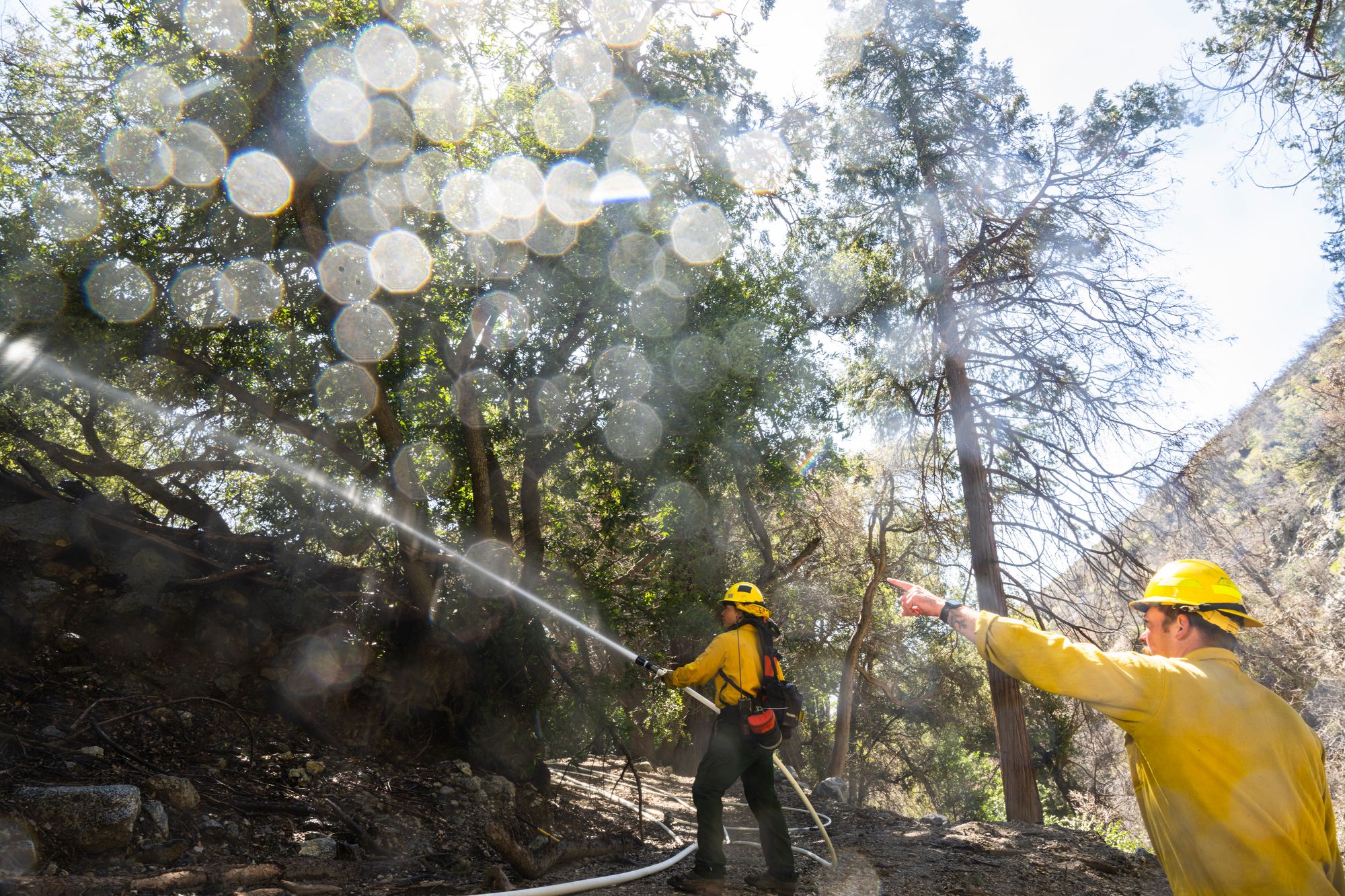
You know better than anyone that wildland fire has changed. Not because you read it in a report — because you felt it. The seasons are longer. The fires are bigger. The runs are more unpredished and the weather is doing things it wasn't doing when you started.
The numbers just confirm what you already know in your bones: over the past thirty years, there has been a fourfold increase in large and long-duration fires in the American West. The length of the fire season has expanded by two and a half months. In 2023, Canada burned 13.4 million hectares — more than six times the ten-year average. In a single season.
The crews now being trained to handle this are doing it in conditions that didn't exist when the 185cc was designed in 1964. They're being deployed earlier in the year, later in the year, in regions that weren't fire country a decade ago, at elevations and in terrain that weren't part of the operational picture when the standard was written.
And here is the part that matters for this conversation: they're doing it with the same body weight restrictions, the same helicopter load limits, and the same physical demands — but in longer seasons, with more ground to cover, and with less margin for error.
The MARK-3® 185cc is 58 pounds. That's the pump you carried. That's the pump you learned on. That pump is an extraordinary piece of engineering. But 58 pounds at the end of a season that runs six weeks longer than it used to — on a crew where a third of the members are under the Quebec legal carry weight limit — is a different calculation than it was in 1975.
What You Taught Us About the 185cc
We want to be clear about something. The Watson Edition didn't come from a marketing department. It didn't come from an engineer sitting in Montreal looking at weight trends. It came from you. From people exactly like you — experienced, skeptical, technically precise — telling us over years of field demonstrations what needed to change.
WATERAX has been in direct conversation with wildland firefighters since before most of the current workforce was born. The 2019 Watson tour covered 12 Canadian provinces and territories, 18 demonstration sessions, hundreds of firefighters. Not to sell them something — to listen. Here is what the experienced firefighters, the fleet managers, the people who had run the 185cc for twenty seasons, actually said.
On weight:
"Lighter weight is really important. There are a lot of situations where the weight of the current MARK-3® can be a challenge. It's one thing to simply lift it but sometimes you are standing out there with one foot on a beaver dam, while the helicopter rotors overhead are blasting you with air, as you struggle to keep your balance while passing the pump to your buddy."
On the platform itself:
"Over the 55-year history of the MARK-3®, the reason that agencies stuck with it is because it's bullet-proof. From our perspective, you are showing us a pump that is 30% lighter and more efficient. The Watson compares to the weight of the MARK-26 but has the performance of the MARK-3®. If you are going to make our world easier — obviously, we are all 100% in agreement."
On the new generation:
"Our new generation of firefighters love innovation. If there are safer and better alternatives like the Watson pump, the IA Crew would like for them to be dispatched and implemented as soon as possible. According to them, the pumps should be distributed faster, given how much lighter and safer they are."
These quotes aren't from rookies excited about new gear. They're from the experienced people at those agencies — the ones who sound like you. The skeptics who picked up the Watson Edition at a demo, ran it, and reached a different conclusion than they expected.
We didn't design the Watson Edition to make old timers feel obsolete. We designed it because old timers told us exactly what the next generation was going to need — and trusted us enough to say it directly.
What Didn't Change — And Why That's the Whole Point
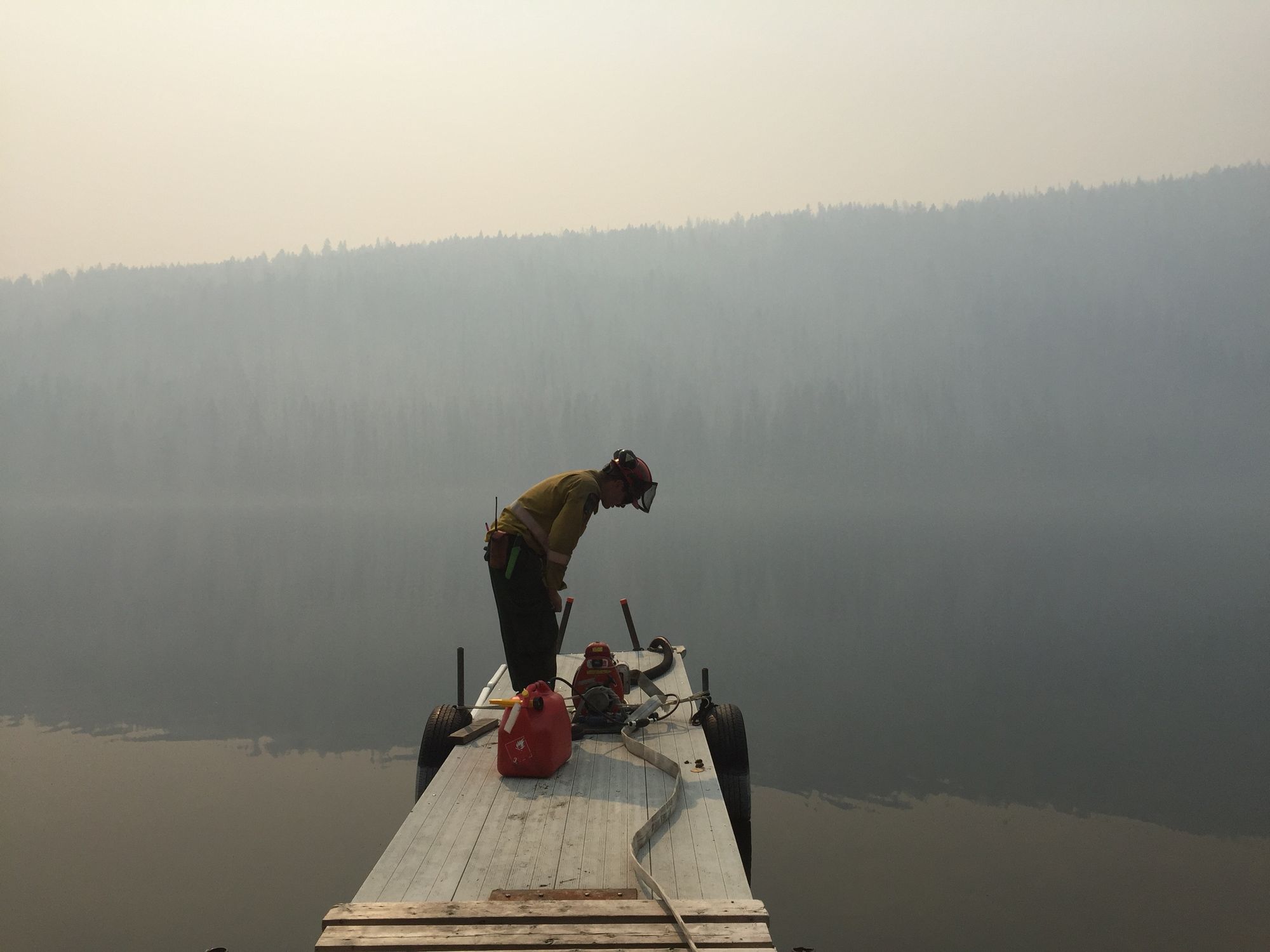
Here is what we want you to know above everything else in this article: the Watson Edition is not a different pump. It is the MARK-3®, rebuilt from the inside out, with one non-negotiable constraint: nothing that defines the 185cc's reliability could be touched.
Frédéric Lefrançois, our VP of Engineering, ran the development program. When people asked him what success looked like, his answer was simple: the Watson Edition had to perform at every metric the 185cc performs at, or better. Everything else was a variable. That was the floor.
So here is what didn't change:
The four-stage centrifugal pump architecture
The 185cc is a four-stage centrifugal pump. So is the Watson Edition. Same fundamental hydraulic design that gives the MARK-3® its ability to build pressure across stages, sustain delivery over long relay distances, and operate predictably across a wide range of conditions. Any pump operator who understands the 185cc will understand the Watson Edition's behavior without relearning anything fundamental.
The performance numbers
380 PSI maximum pressure. 100 US gallons per minute maximum flow. 877 feet of maximum head. These are not compromised on the Watson Edition. They match or exceed the 185cc on every performance metric. The pump end is smaller and lighter — but the hydraulic output is identical because it was designed and optimized specifically for this engine, this platform, this mission. A smaller, purpose-built system doing the same work as a larger, adapted one. That is not a downgrade. That is good engineering.
System compatibility
Your hose lays. Your fittings. Your tandem adaptors, Wye connectors, porta-tanks, relay configurations. The Watson Edition connects to all of it. Same thread standards. Same NST fittings. An agency that has run MARK-3® systems for thirty years can take delivery of Watson Edition pumps and put them in operation the same day. We made this non-negotiable because we understood — from talking to people like you — that the water-moving systems your agencies have built over decades are as important as the pump at the end of the line.
QPL qualification — the same standard, the same test
The MARK-3® 185cc holds QPL qualification under USDA Forest Service Specification 5100-274e. The Watson Edition holds QPL qualification under the same specification. It passed the 100-hour endurance test at San Dimas — the same test, the same standard, the same result. The 185cc and the Watson Edition are the only two pumps in the world currently qualified under 5100-274e. If you trust one, the standard that certifies the other is identical.
What Innovation Actually Means — For Someone Who's Seen It Before
You've seen equipment change in this industry before. Some of it was genuine improvement. Some of it was noise. You've developed a good instinct for the difference — and that instinct is worth respecting.
So let's talk about what innovation means in this context, specifically, in terms you can hold to.
In 1960, the MARK-1 became the MARK-2 — a new engine, a new frame design, a transition from a triangular base to the backpacking frame that would define the MARK-3® for sixty years. At the time, some people with experience on the MARK-1 probably had questions. The frame looks different. The engine is different. Is it still a MARK pump?
It was. And the backpacking frame became so trusted that you're reading this article because the people who adopted it helped make it the standard.
In 2014, WATERAX acquired the manufacturing rights to the 185cc engine from ROTAX. The engine that had defined the MARK-3® for fifty years was now being made by the pump company itself — with Nikasil cylinder upgrades and engineering refinements that passed the updated QPL standard in 2015. At the time, some people had questions about whether a changed engine meant a changed pump.
It didn't. The 2015 MARK-3® passed the same 100-hour endurance test the 1965 MARK-3® would have passed, to a more demanding standard.
The Watson Edition is the next iteration of that same lineage. A new engine, purpose-built for the first time in the pump's history — not adapted from another application, but designed from a blank page to drive this specific pump end at this specific operating point. A new frame, built from materials that outperform steel in every impact and corrosion scenario we could test. A new interface that tells the operator what the engine is doing instead of leaving them to guess in the smoke.
What stayed the same: the four-stage pump design. The QPL qualification. The system compatibility. The reliability standard. The mission.
That is what innovation looks like when it's done with respect for what came before it. Not a break from the past. A continuation of it — with better tools.
The Firefighter You're Going to Hand It To
There is one more thing we want to say — and this is the most important part of the article, so we're going to say it plainly.
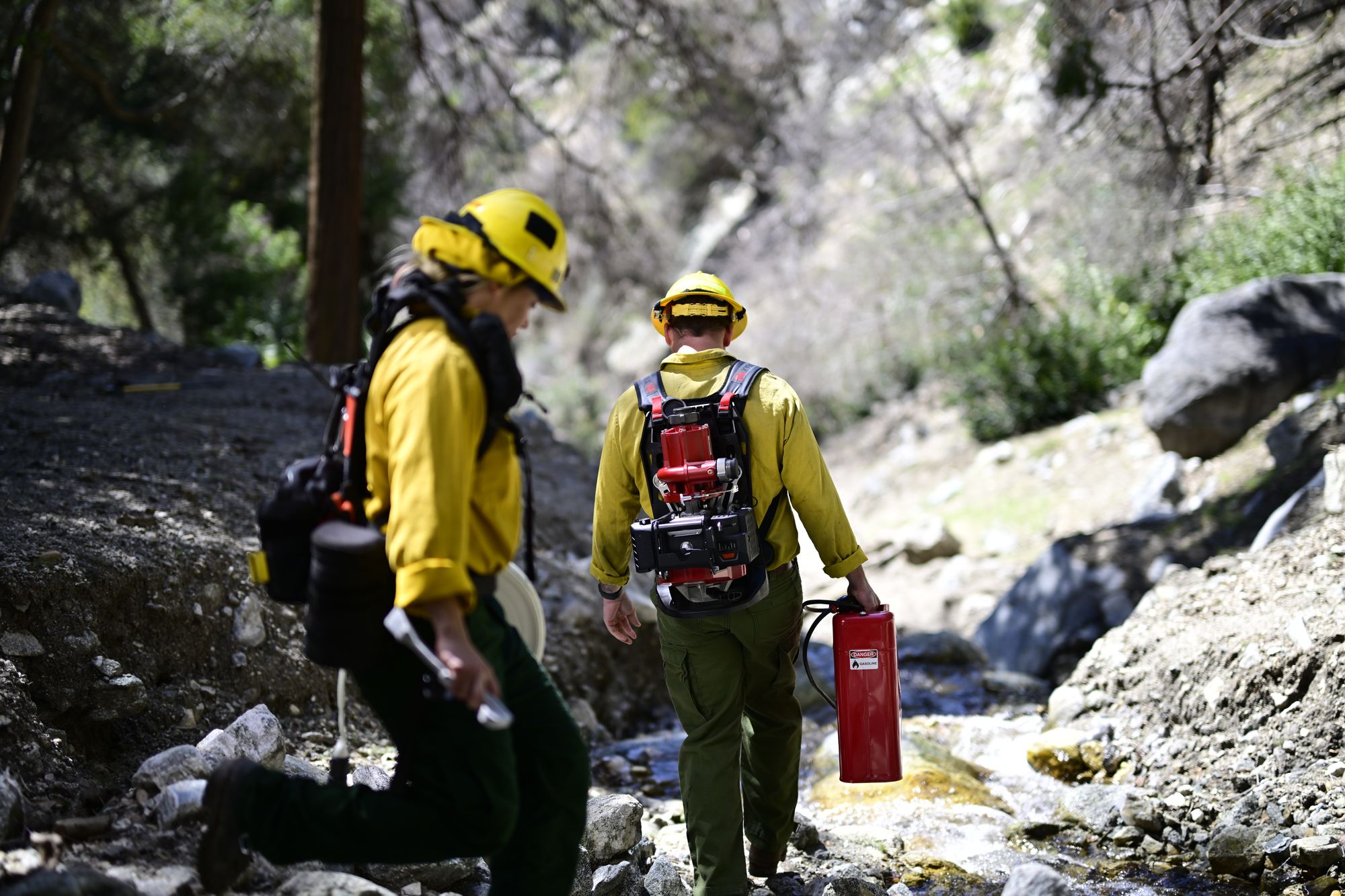
You know something that the person who just joined their first crew doesn't know yet. You know what it costs to carry this work for a season. You know what it does to a body after twenty years of slips, trips, falls, and carrying 58 pounds over terrain that was never designed to be walked on. You know what it feels like to pass a pump to someone who is smaller than you and watch them struggle with something you handle without thinking.
The Watson Edition is 44 pounds. Fourteen pounds lighter. That number sounds modest on paper. On a two-kilometer hike to a water source at the end of a sixteen-hour operational day, it is not modest. Multiplied across a season that now runs six weeks longer than it did when you started, it is not modest. Applied to a crew that includes people for whom 58 pounds was a genuine physical barrier to doing the job — it is the difference between someone making it through a season and someone not.
You didn't get into wildland firefighting to be replaced. Neither did the 185cc. But you got into this work because you believed that the people fighting fires deserved the best equipment available to do it. The Watson Edition is the best equipment available. It passes every standard the 185cc passes. It performs at every level the 185cc performs at. And it is fourteen pounds lighter for the person who is going to carry it when you're not there anymore.
If the version of you that was starting out had been handed the Watson Edition instead of the 185cc — lighter, easier to start, with a diagnostic system that tells you what's wrong instead of making you figure it out under pressure — would you have been worse off? Would the pump have been less trustworthy? Would the work have been less meaningful?
Or would you have just had fourteen more pounds of energy left for everything else the job demands?
We're Not Done Talking
We know this article doesn't resolve everything. You might still have questions. You might want to run the Watson Edition yourself before you form an opinion. That is exactly the right instinct — and we want to support it.
If your agency wants a hands-on demonstration, reach out through your regional WATERAX contact or at waterax.com. We'll send someone who has actually been on the fireline. Someone who can answer your questions in the language of people who've done the work, not the language of a product sheet.
The MARK-3® built its reputation one firefighter at a time. The Watson Edition will do the same. We're not in a hurry to convince you. We're in it for the long haul — the same way you were, the same way the 185cc was, and the same way John Colquhoun Watson Jack was when he built the first pump that eventually carried his name in 1898.
The fire doesn't get easier. The people fighting it deserve better equipment every generation. That has always been the point.