
Moving Water in the Wildland Urban Interface: Lessons from the Field
Scroll DownWildland fire behavior is changing. So is where it is occurring.
More incidents are impacting the wildland urban interface (WUI), where structures, infrastructure, and vegetation meet. For fire departments operating in these environments, one of the greatest challenges is not always the availability of water. It is the ability to move it effectively.
In many WUI incidents, water is present. The challenge is access, pressure, distance, and time.
Getting water where it needs to be, quickly and reliably, often determines whether a structure is protected or lost.
The Reality of WUI Operations
Unlike municipal environments, the WUI rarely offers the consistency of hydrant systems. Crews are often faced with:
• Limited or non-existent fixed water infrastructure
• Long hose lays across uneven terrain
• Elevation changes that affect pressure and flow
• Rapidly shifting fire conditions
• Limited resources during initial attack
Traditional structural firefighting approaches do not always apply in these conditions.
Establishing a dependable water supply without relying on hydrants is essential.
Water Is Available. Access Is the Challenge.
One of the most overlooked realities in WUI firefighting is that water sources are often present but underused.
Common sources include:
• Ponds and lakes
• Irrigation systems
• Portable tanks
• Swimming pools
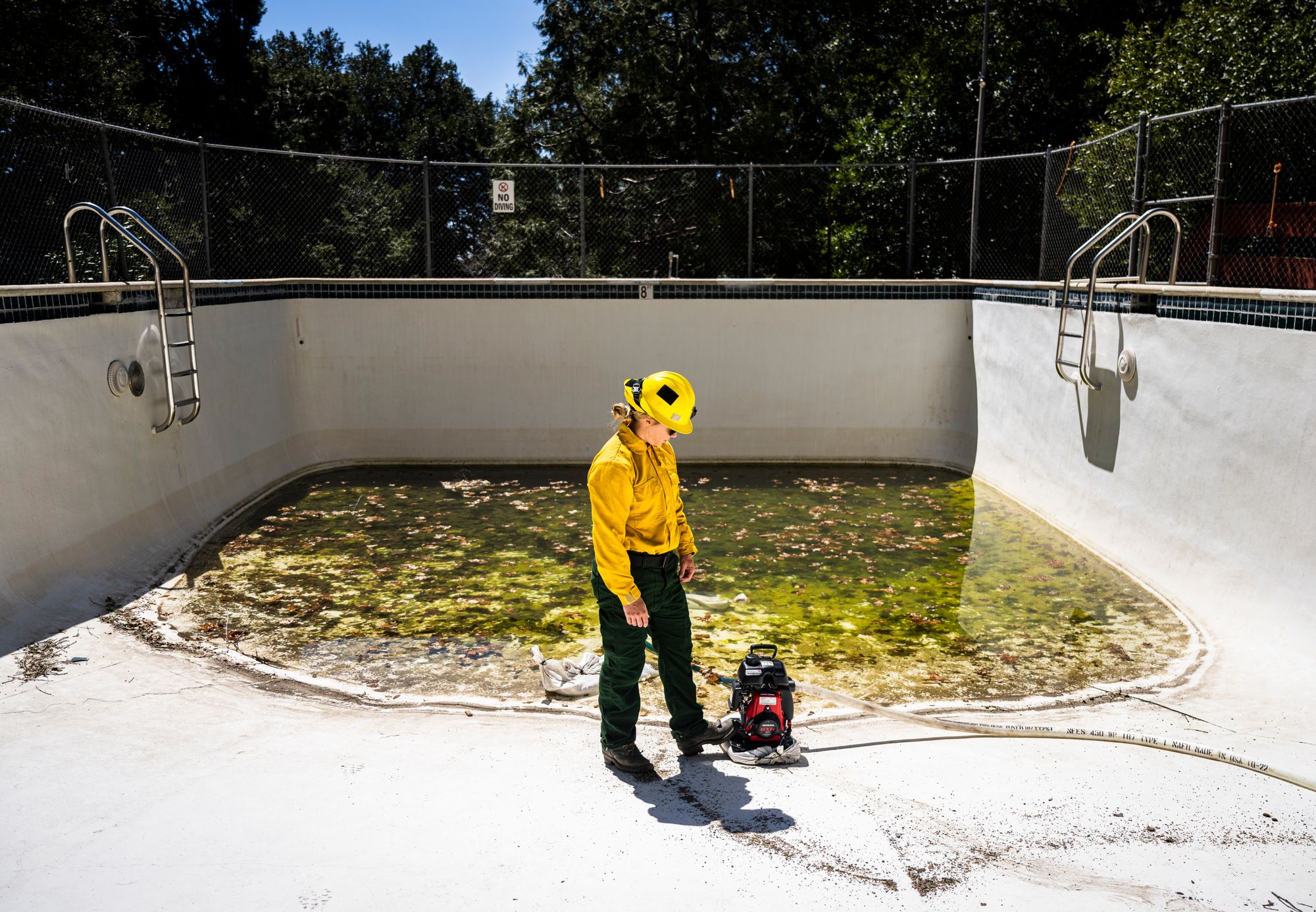
These can provide a reliable supply if crews are prepared to use them. Each source, however, presents its own challenges.
Access may be limited. Debris can affect drafting. Distance from the structure may require extended hose lays. Elevation can reduce effective pressure.
Success depends on preparation, adaptability, and a clear understanding of how to move water across these variables.
Distance, Elevation, and Pressure
Once a water source is established, delivery becomes the next challenge.
In WUI operations, moving water is rarely straightforward. Crews must account for distance, elevation, and system performance.
Distance
Long hose lays increase friction loss and reduce available pressure. This becomes critical when structures are set back from roadways or located deep within properties.
Elevation
Operating uphill significantly impacts performance. Pressure drops as elevation increases, requiring careful planning and often additional pumping support.
Flow and Pressure Balance
Different scenarios demand different priorities. Structure protection often requires sustained flow. Long-distance water movement requires higher pressure.
Understanding how to balance these factors is key to maintaining effective water delivery.
Pump Placement and Relay Operations
In many WUI incidents, a single pump at the water source is not enough.
Relay pumping is often required to maintain pressure and flow over long distances and elevation changes. Pumps must be positioned strategically along the hose lay.
Key considerations include:
• Placement based on terrain and hose length
• Redundancy in case of failure
• Clear communication between operators
When executed properly, relay systems extend operational reach and improve overall efficiency.
Structure Protection Starts Early
In the WUI, structure protection is often about preparation rather than suppression.
Applying water early can reduce ignition potential, lower surface temperatures, and protect vulnerable areas such as roofs, decks, and surrounding vegetation.
Common methods include:
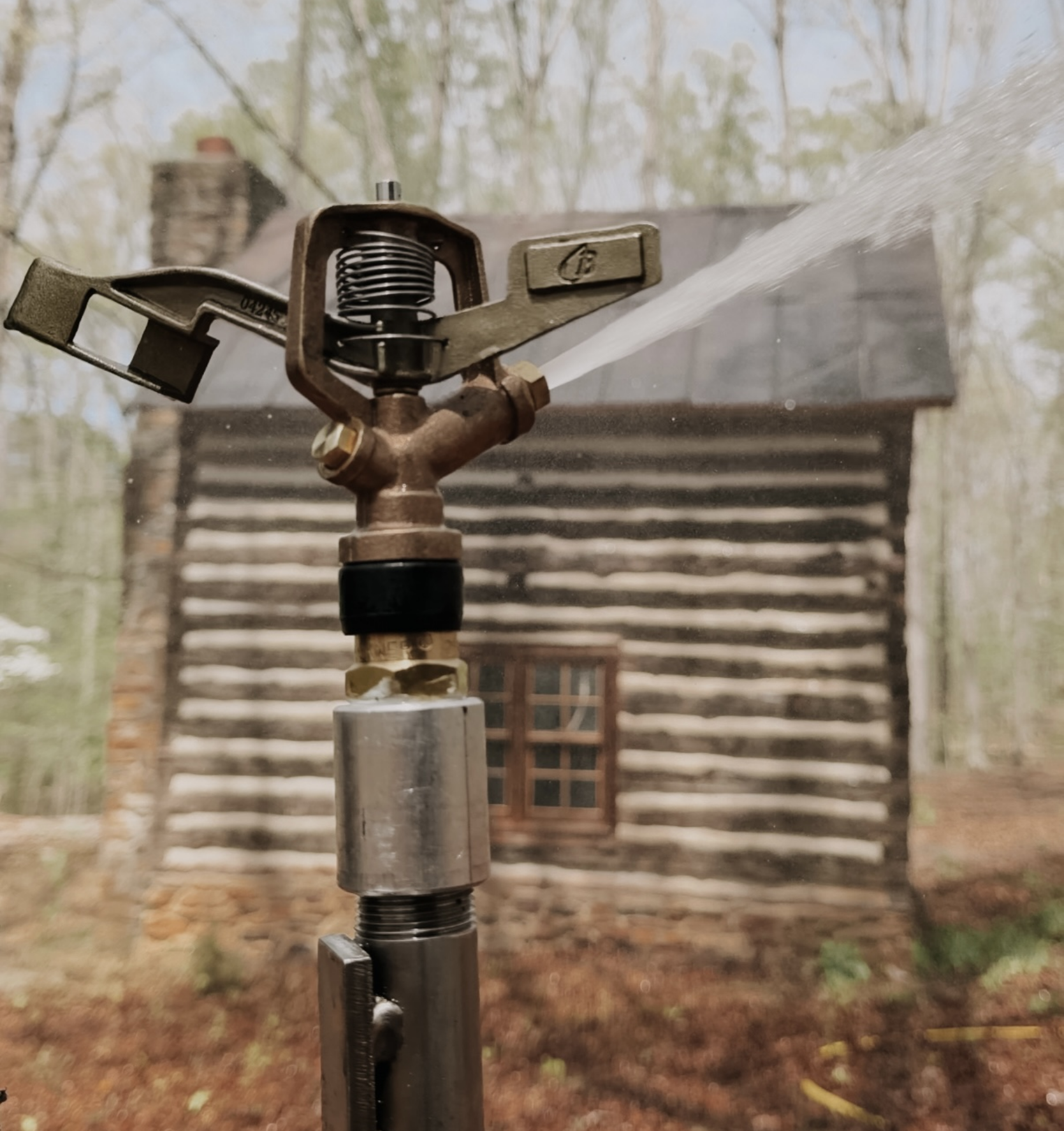
• Sprinkler systems
• Wetting lines
• Direct application to exposures
Timing is critical.
If water application begins too late, after ember exposure or direct flame contact, effectiveness decreases significantly. Early deployment provides a clear advantage.
Lessons from the Field
Field operations reinforce the same principles repeatedly. Preparation matters. Conditions change quickly. Equipment must perform without hesitation.
During prescribed burns used for land management and habitat improvement, water systems play a key role in maintaining control. These operations are planned, but conditions can shift.
In one instance, changing winds pushed fire beyond its intended boundary. Rapid deployment of hose lines and immediate water application allowed crews to contain the situation before it escalated.
This type of scenario highlights a broader reality.
Conditions are unpredictable. Response time is critical. Reliability is not optional.
Equipment That Supports the Operation
Tactics drive operations, but equipment enables them.
In WUI environments, effective water movement depends on equipment that supports the demands of the field.
Portability
Systems must be carried and deployed across difficult terrain.
Reliability
Equipment must perform in heat, dust, and extended operating conditions.
High Pressure Capability
Moving water over distance and elevation requires sufficient pressure to maintain flow.
Speed of Deployment
Time is limited during initial attack. Equipment must be quick to set up and operate.
Field Serviceability
Downtime during an incident can compromise the operation. Systems that allow for quick maintenance or component replacement provide a significant advantage.
Selecting Equipment for WUI Operations
Equipment selection plays a critical role in how effectively water can be moved in WUI environments. The focus should be on performance characteristics that support real-world conditions, not just specifications on paper.
Portable high-pressure pumps remain a cornerstone of wildland operations, particularly when long hose lays and elevation gain are involved. Systems such as the MARK-3 platform have become widely adopted because they are designed to deliver consistent pressure over distance while remaining lightweight enough for transport into remote areas.
Smaller, lightweight pumps can also play an important role during initial attack or in support roles. Compact units allow crews to move quickly, establish water supply in tight or difficult terrain, and support operations where larger equipment may not be practical.
In addition to professional firefighting equipment, there is growing interest in systems that can support structure protection in WUI settings. Mobile pump configurations, including cart-based systems, can provide property owners and support personnel with the ability to move water from available sources such as pools or tanks. When used appropriately and in coordination with fire services, these systems can assist in early-stage protection efforts.
Regardless of the configuration, the priority remains the same. Equipment must be reliable, easy to deploy, and capable of performing under pressure. In WUI environments, simplicity and dependability often determine whether a system contributes to the operation or becomes a liability.
Downtime Is a Critical Risk
Downtime is often underestimated in planning but becomes very real during operations.
A pump failure at the wrong moment interrupts water delivery when it is needed most. Reducing downtime is not just a maintenance concern. It is an operational priority.
Design features that help address this include:
• Simplified systems with fewer failure points
• Components that can be replaced quickly in the field
• Modular configurations that allow flexibility
The goal is sustained performance under pressure, not just peak performance.
The Role of Water Movement in the WUI
As WUI environments continue to expand, the ability to move water effectively is becoming central to firefighting operations.
Departments are increasingly operating in areas without traditional infrastructure. This requires a shift in both training and equipment strategy.
Focus areas include:
• Drafting from alternative water sources
• Relay pumping techniques
• Structure protection planning
• Equipment selection based on real-world conditions
Fire behavior is evolving. Operational environments are becoming more complex.
Water movement is no longer a secondary consideration. It is a primary factor in operational success.
Conclusion
In wildland urban interface firefighting, outcomes are often determined by a simple question.
Can water be delivered where it is needed, when it is needed?
The answer depends on preparation, execution, and the ability to adapt to real conditions.
Water remains one of the most effective tools available.
Its impact depends entirely on the ability to move it.