
125 years. One mission. The untold history of the MARK-3®
There is a pump sitting in a fire cache somewhere right now that has moved water on a hundred fires. It has been dropped from helicopters, submerged in rivers, started at altitude in smoke-filled air, and passed from one generation of firefighters to the next like a piece of inherited equipment. Its name is on the lips of wildland crews from Canada to Chile, from France to Australia. That pump is the MARK-3®. And its story begins not in a modern engineering lab, but in Montreal, in 1898, with a man whose name you probably don't know — but whose work you trust with your life.
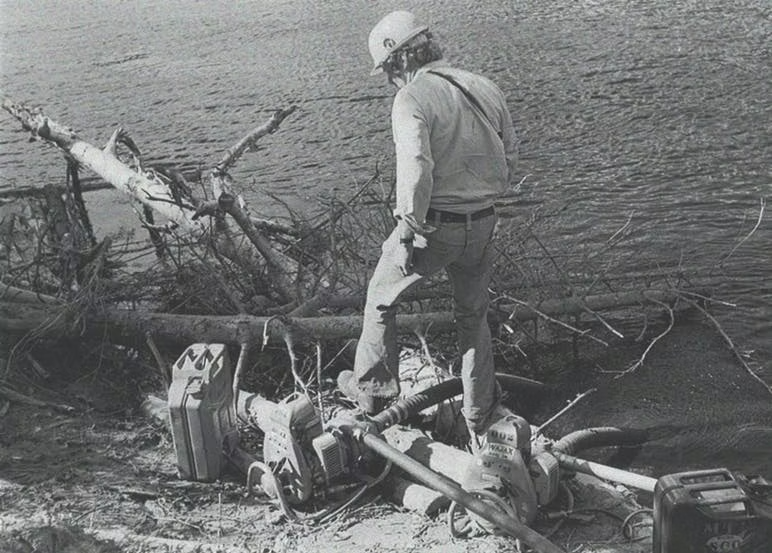
John Colquhoun Watson Jack — The Man Behind the Pump
Born in Montreal on August 19, 1870, John Colquhoun Watson Jack was a Canadian inventor, businessman, and relentless experimenter. In 1898 he founded Watson Jack & Company, a firm that would trade in metals, electrical supplies, chemical boilers, and eventually the technology that would change wildland firefighting forever.
By 1925, Watson Jack & Company had become the manufacturer of a portable fire pump that would define an era. They called it the WAJAX — a direct acronym of the founder's name: Watson Jack. At 200 PSI, it was the most powerful portable pump available at the time, and it became the standard for forest fire protection across Canada almost immediately.
Watson Jack died in 1928, firmly established in the portable pump sector. But the company he built, and the philosophy he embedded in it — precision engineering, field reliability, purpose-built design — lived on far beyond him.
From WAJAX to MARK-3®: A Century of Refinement
What followed Watson Jack's death was a long, unglamorous, and essential chapter of industrial history. The pump evolved. The company changed hands, merged, rebranded. But the fundamental commitment never wavered: build a portable fire pump that works.
Here is how the MARK-3® came to be:
What the MARK-3® Got Right — And Why Nobody Could Replicate It
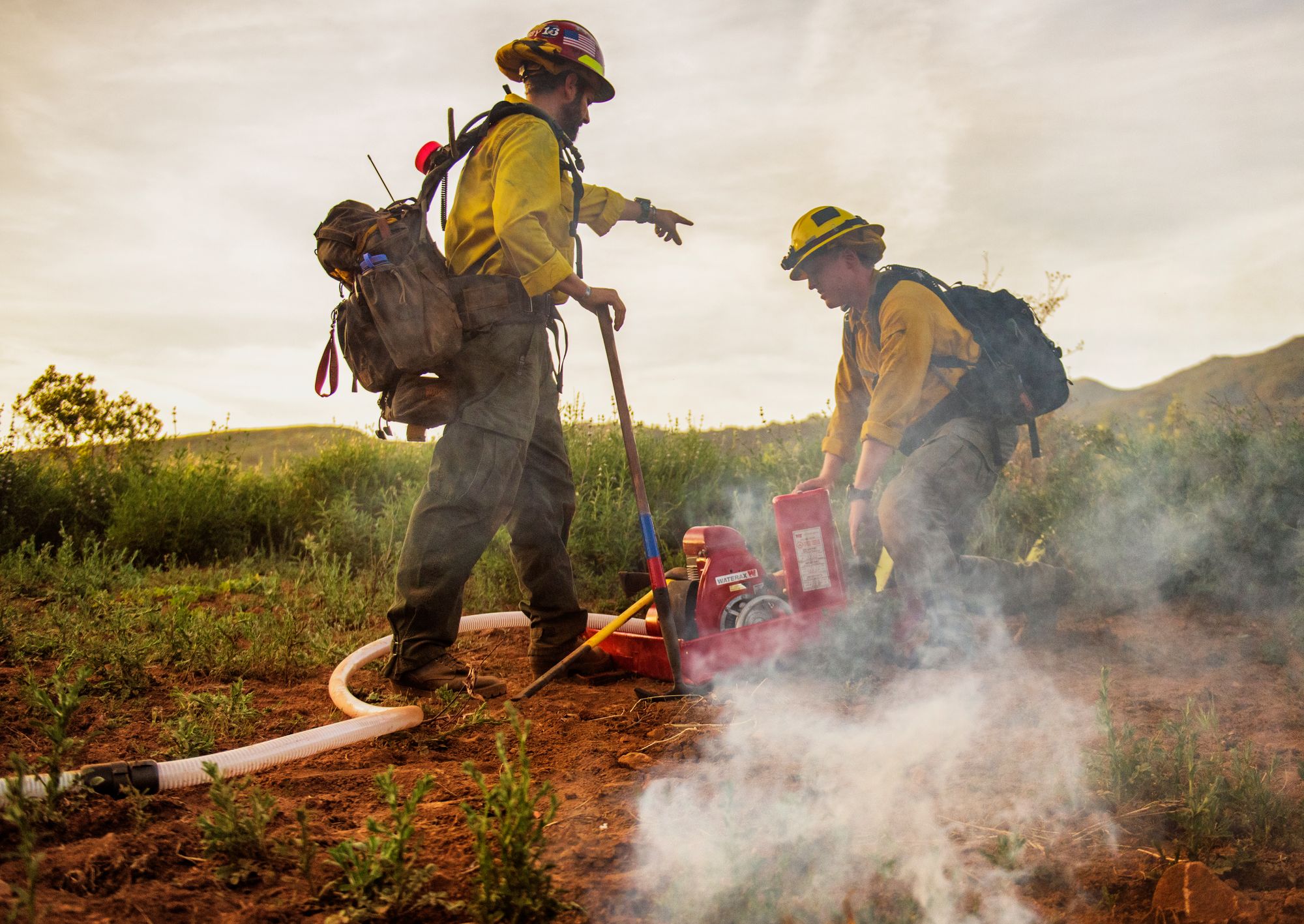
The MARK-3® 185cc isn't a pump that became a legend by accident. It earned that status through decades of performance in conditions that would destroy lesser equipment. It runs in scorching heat, in freezing cold, at altitude, at sea level, in salt water and fresh water, after being dropped from a helicopter and recovered from a river bank.
Agencies around the world wrote their standards around it. Firefighters learned their craft on it. The MARK-3® became, as WATERAX President Raffaele Gerbasi has said, the pump that likely moved more water fighting forest fires than all other pumps combined.
Its four-stage centrifugal pump end. Its 185cc engine. Its steel frame. Its USFS-standard discharge configurations. These weren't features — they were commitments. And for sixty years, those commitments held.
By the time WATERAX came into full ownership of the platform, the MARK-3® 185cc was trusted by the US Forest Service, CAL FIRE, every Canadian province's wildfire agency, and forestry departments in over 50 countries. The MARK-3® wasn't just a product. It was infrastructure. It was the baseline assumption of wildland firefighting everywhere fires burn.
The Weight of That Legacy
When you understand the history, you understand why any change to the MARK-3® carries enormous weight. This is not a consumer product that gets refreshed every product cycle. This is field infrastructure trusted by people whose lives depend on it.
That's exactly why the next chapter — the Watson Edition — took over five years to develop. That's why it was tested in the field, not just the lab. That's why it carries QPL qualification. And that's why we want you to understand where it came from before we tell you what it became.
The MARK-3® is 125 years of one idea: the right pump, reliably, in the hands of the people who need it most. Everything that comes next is built on that foundation.