
The Water Delivery Challenge
Scroll DownWildland firefighters rarely have the luxury of fighting fire next to an unlimited, pressurized water source.
A lake may be nearby, but a hundred metres or more (hundreds of feet) below the fire. A river may be accessible only on foot. A hydrant may be kilometres (miles) away. Portable water tanks, brought directly to the fireground by firefighters or delivered by helicopter may be positioned in difficult-to-access locations. A crew may have hundreds of metres (thousands of feet) of hose between the pump and the nozzle. In the wildland-urban interface, water may exist in swimming pools, ponds, reservoirs or tanks, but still needs to be moved efficiently to structures under threat.
In all of these situations, finding water is only the beginning.
The real challenge is getting enough water, at the right pressure, to where firefighters need it.
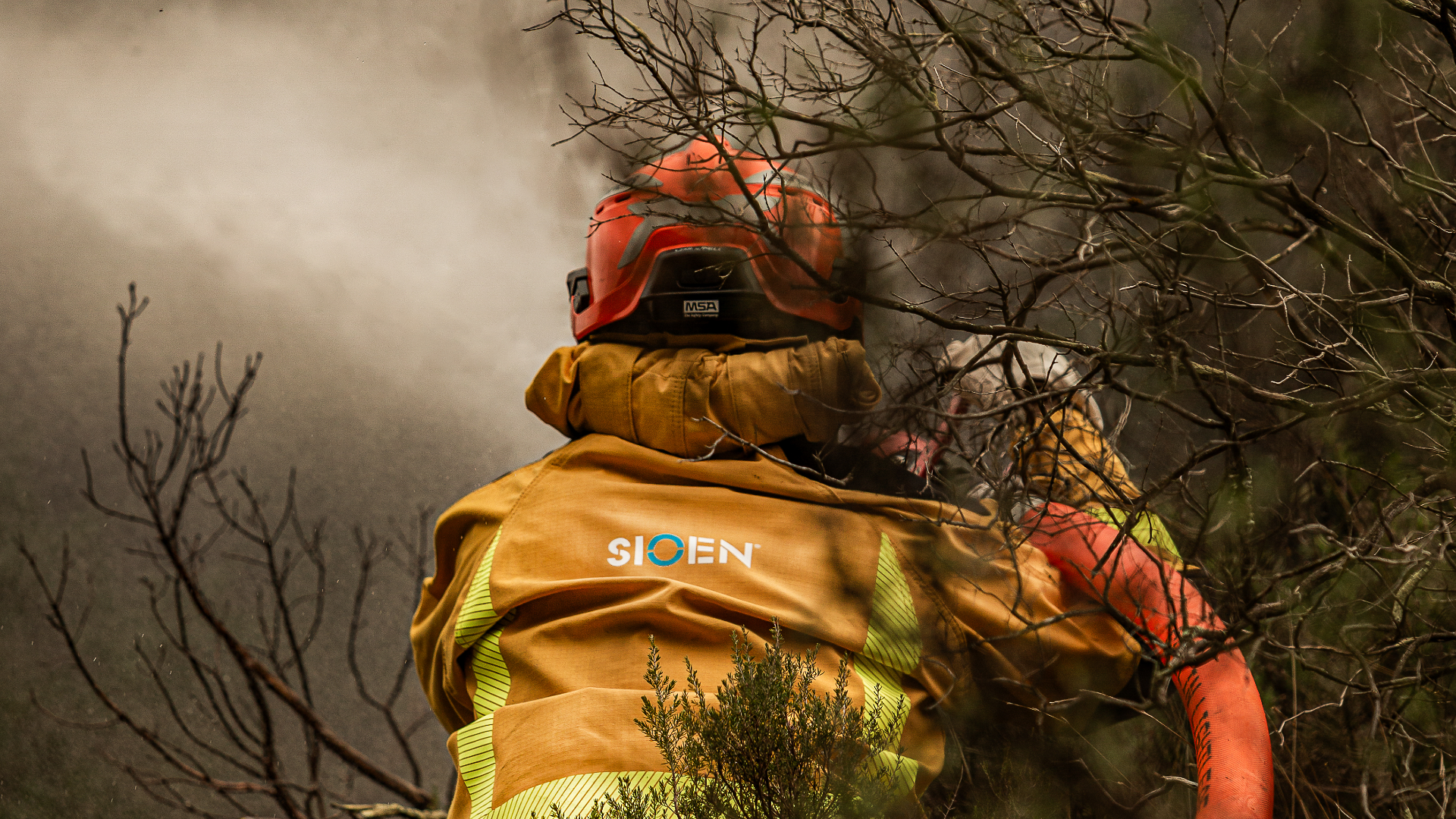
As wildfire operations grow more complex, water delivery deserves its own place in operational planning. Distance, elevation, terrain, available water sources, required flow and equipment portability all influence how successfully water can be moved from source to fireline.
For crews working far from any hydrant, understanding those variables is part of the job.
Water is available. Access is the challenge.
Wildland firefighting has always required adaptability.
Crews may draft from lakes, rivers, streams, ponds, swimming pools, irrigation reservoirs, portable tanks or virtually any other accessible water source.
Portable fire pumps allow firefighters to bring pumping capability directly to those sources, including places conventional fire apparatus may never reach.
Reaching the water doesn't solve the problem on its own, because the water still has to travel.
In some operations, that might mean about 100 m (a few hundred feet) of hose. In others, it can mean a kilometre or more (thousands of feet) across changing terrain and significant elevation.
Every metre of hose and every metre of climb affects what reaches the nozzle.
Distance changes everything
Water moving through hose encounters resistance.
That resistance creates friction loss, reducing the pressure available farther down the hose lay. The longer the hose, the greater the cumulative effect.
Flow rate, hose diameter, fittings, valves and the overall configuration of the system also influence friction loss.
That is why a pump's maximum pressure or maximum flow says little on its own.
What counts is the pressure and flow left at the end of the hose lay.
If firefighters need a specific pressure and flow at a nozzle hundreds of metres or more (hundreds or thousands of feet) from the water source, the pumping system must provide enough performance to overcome losses along the way while still delivering the required nozzle pressure.
The goal is enough water, at the right pressure, in the right place, for as long as the operation needs it.
Then there is elevation
Distance is only part of the equation.
Moving water uphill requires the pump to overcome the weight of the water column itself.
As elevation increases, additional pressure is required simply to lift the water before friction loss and nozzle requirements are considered.
This becomes particularly important in mountainous terrain, remote wildland operations and communities built along slopes and ridgelines.
A lake that looks close to the fire on a map can be a long way off in hydraulic terms.
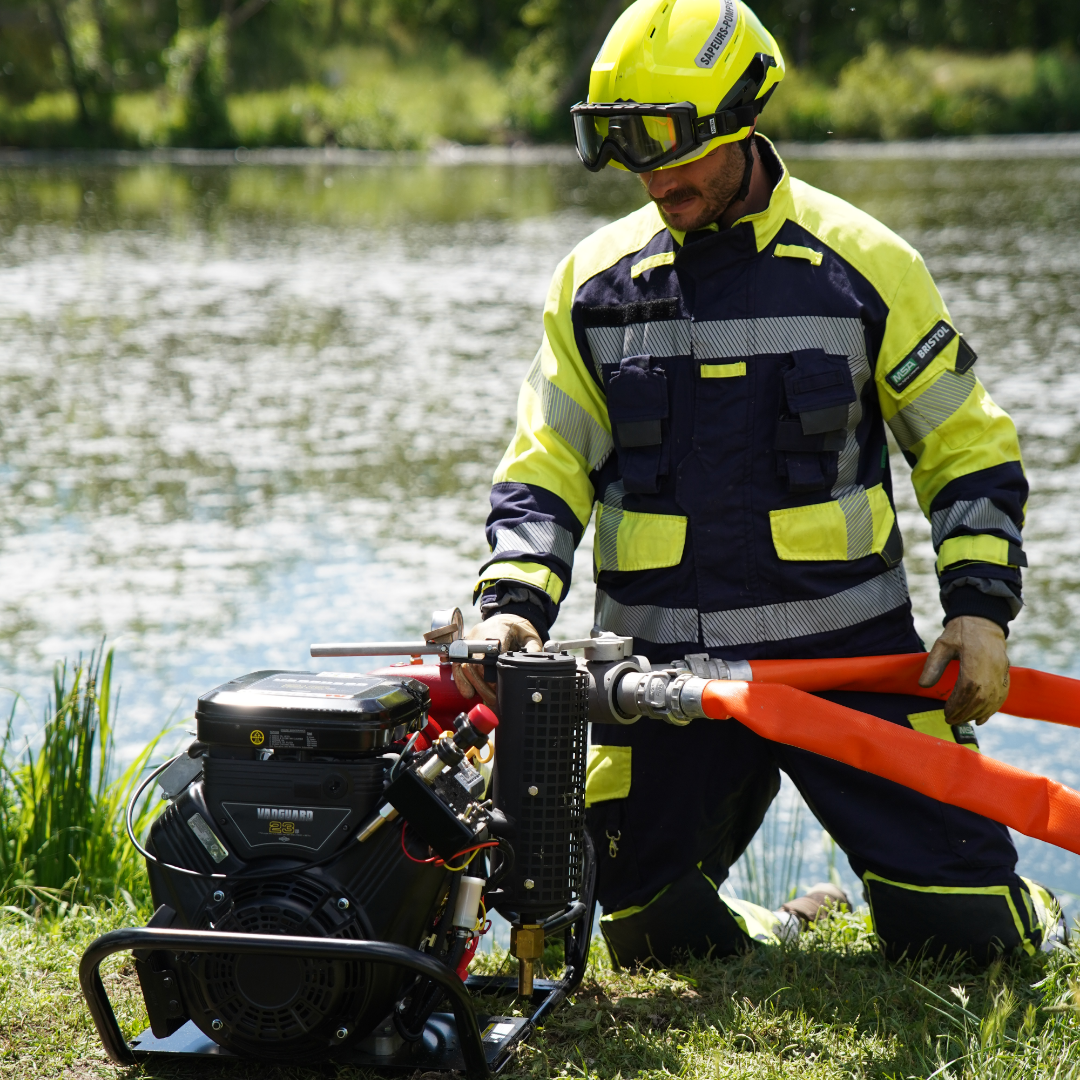
Understanding elevation, friction loss and required discharge pressure allows crews to build water-delivery systems around actual fireground requirements rather than assumptions.
The answer might be a higher-pressure pump, a larger hose diameter or a second pump farther along the lay.
When one pump isn't enough
Long-distance water delivery does not necessarily depend on one pump doing all the work.
Relay pumping allows multiple pumps to be positioned strategically along a hose lay, with one pump supplying another as water moves toward the fire.
On remote fires, this means crews are no longer limited by how far one pump can push water. They can build the system around the terrain, adding pumps where distance or elevation demands it.
The question changes from:
“Can this pump reach the fire?”
to:
“How do we design the system that gets the water there?”
Portability is part of performance
Pressure and flow mean nothing if the pump can't get to the water.
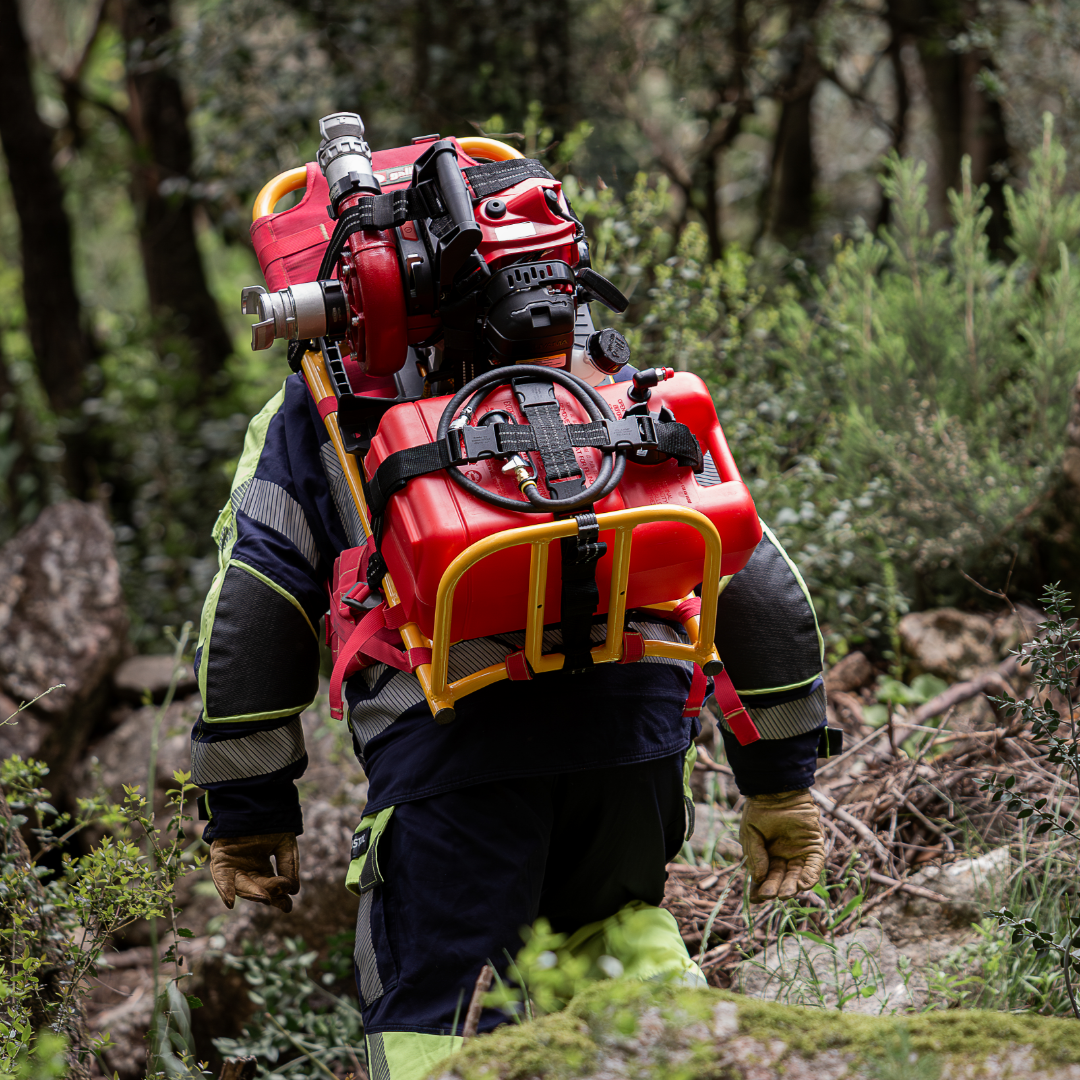
Wildland operations frequently take firefighters beyond roads and vehicle access. Equipment may need to be carried through forests, down steep embankments or across uneven terrain before pumping can even begin.
So weight matters.
he MARK-3® pump has built its reputation around combining high-pressure performance with portability. The current MARK-3® Watson Edition pump weighs approximately 20 kg (44 lb), allowing crews to carry significant pumping capability into locations inaccessible to conventional apparatus. It delivers a maximum pressure of 26.2 bar (380 psi), a free flow of 379 L/min (100 US gpm) and a maximum head of 267 m (877 ft).
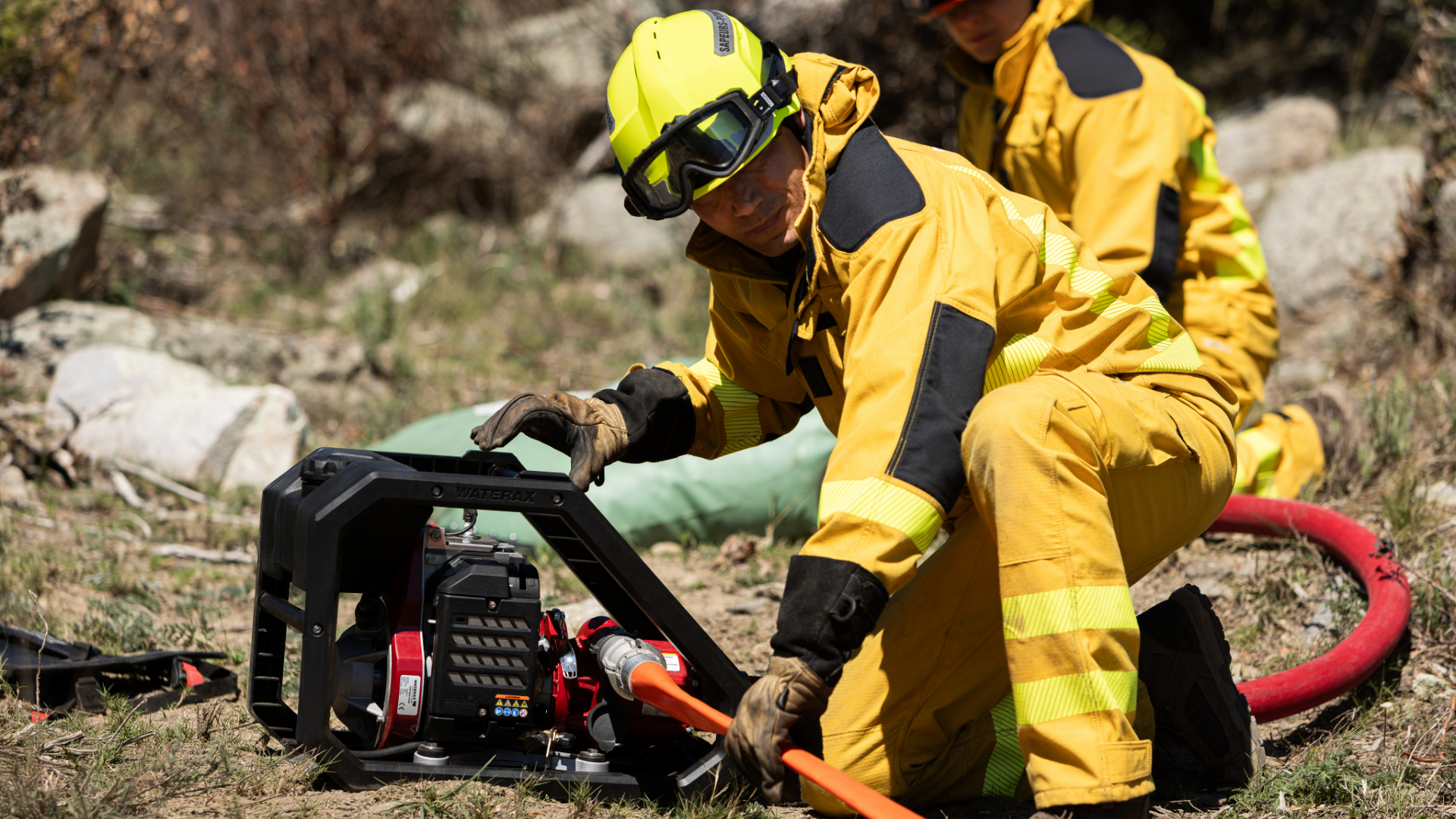
Its purpose-built two-stroke engine runs in virtually any orientation, which helps when there is no flat spot to set the pump down.
Add backpack straps to the integrated carrying frame, and the pump can be carried on a firefighter's back through difficult terrain.
In this kind of terrain, the pump's weight helps decide where crews can set up.
And where the pump goes shapes the entire water-delivery plan.
Matching the pump to the mission
No single pump suits every job.
A crew supplying several sprinklers around a small structure has very different requirements from a crew pushing water a kilometre or more (thousands of feet) through mountainous terrain.
A high-flow operation has different hydraulic requirements from a long hose lay requiring significant pressure.
Pump selection should start with the mission.
- How much water is required?
- How far must it travel?
- How much elevation must be overcome?
- What hose diameter will be used?
- What pressure must remain at the nozzle or sprinkler?
- How accessible is the water source?
- How will the pump be transported?
The answers point to the right mix of pressure, flow, portability and pumping configuration.
WATERAX develops portable fire pumps across a range of operational requirements, from compact platforms such as the MINI-MARK® and MINI-STRIKER® pumps to high-pressure MARK-3® and BB-4® pumps and higher-flow solutions such as the B2X.
Different platforms. Different capabilities.
One objective: getting water where it needs to go.
Beyond the wildland fireline
The same water-delivery principles apply more and more in the wildland-urban interface.
Homes and communities threatened by wildfire may have plenty of water nearby without access to conventional municipal fire protection.
Swimming pools, ponds, lakes, tanks and irrigation reservoirs can become valuable sources when paired with appropriate pumping and water-delivery equipment.
Structure protection systems can use that water to supply sprinklers and wet vulnerable areas before wildfire arrives.
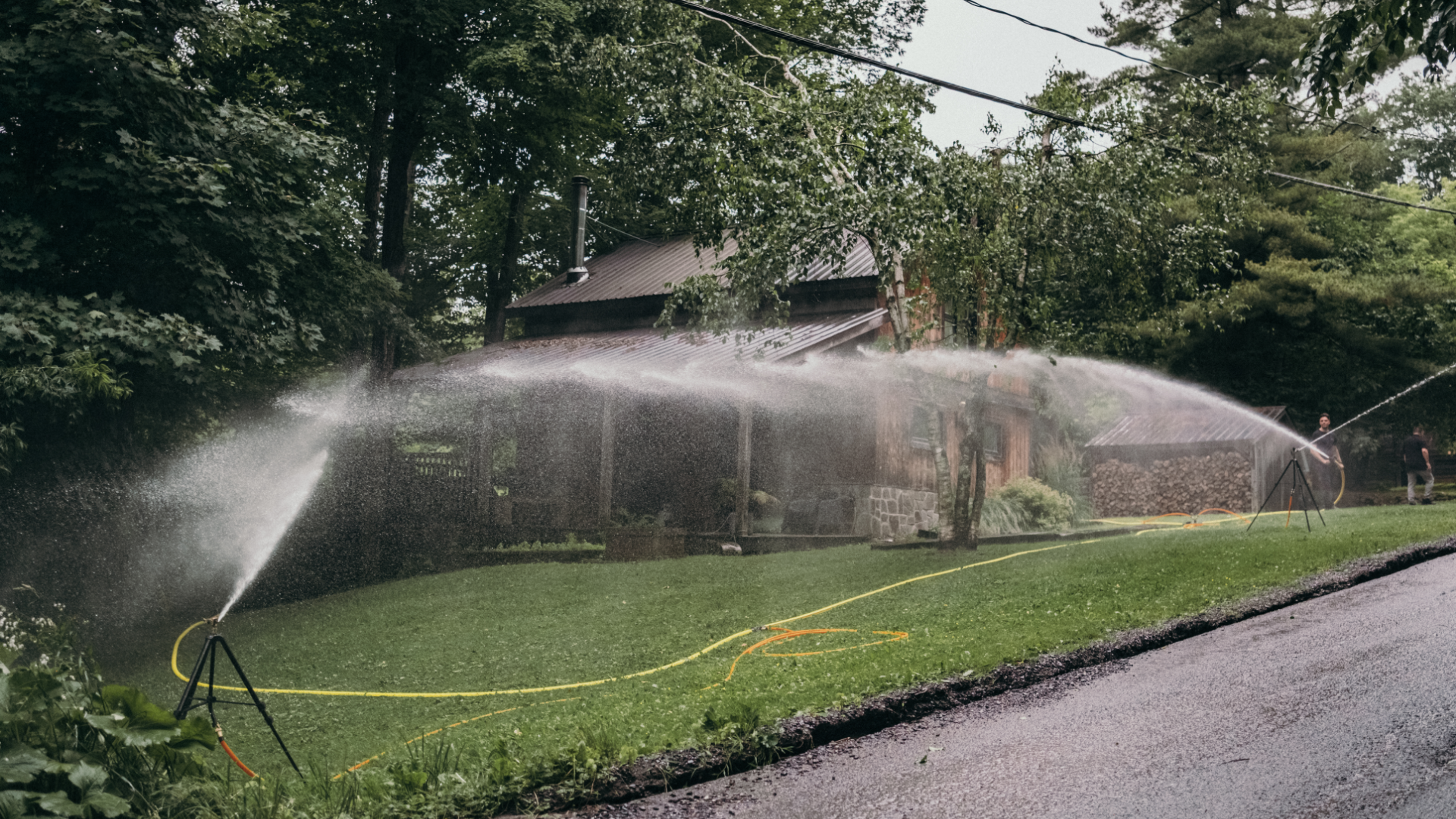
These systems are not intended to extinguish an advancing wildfire or replace firefighters. They are one part of a broader preparedness plan that also includes defensible space, vegetation management and fire-resistant construction.
As WATERAX explored in its recent work on structure protection, properties with existing water supplies can use portable pumping systems to support sprinkler layouts without relying exclusively on hydrants.
It's the same problem in a different setting:
The water exists.
It still has to get where it matters.
Designing around the fireground
Wildfire environments will never be standardized.
A crew in Canada may be operating around remote lakes and boreal forest. Firefighters in Europe may contend with steep mountainous terrain and communities built directly into the wildland-urban interface. Crews in Latin America may encounter significant elevation and limited vehicle access. In parts of Asia, canals, rivers and other natural water sources can become part of the operational water supply.
Equipment and tactics vary from region to region, but the physics don't. Distance creates friction loss, elevation demands pressure, flow has to meet demand, and none of it matters until the equipment reaches the water. Good water delivery starts with understanding the mission, long before anyone starts the pump.
More than moving water
For more than a century, WATERAX has developed pumping equipment around the realities firefighters encounter in the field.
The technology has changed a great deal in that time. The problem hasn't: there is water in one place, and firefighters need it somewhere else.
Between those two points may be a mountain, a forest, a community, 1.6 km (a mile) of hose or terrain no apparatus can cross.
Solving what happens between those two points is the water delivery challenge.
And that is the mission: moving water where it matters most.