
Why Can a MARK-3® Pump Run Upside Down?
Scroll DownThe 2-Stroke Advantage in Wildland Firefighting
If you’ve seen the videos of a MARK-3® pump operating upside down, your first reaction may have been: Why would anyone ever need to do that?
The short answer is that, under normal circumstances, you probably wouldn’t.
A suction hose is the preferred way to draft water from a lake, river, creek, pond, or other suitable water source. But anyone who has spent time around wildland operations knows that the fireline rarely gives you perfect circumstances.
Equipment can be damaged. A suction hose can be lost, forgotten, or unavailable when it is needed. Access to the water can be difficult. The shoreline might be too steep or unstable to position a pump where you normally would.
When you are working in a remote environment, you may have to solve a problem with the equipment available to you.
That is where the ability to get creative and adapt to the situation becomes valuable.
Our inverted MARK-3® pump demonstration was designed to show one extreme example of that adaptability. By positioning the pump end at the water source while keeping the upper components out of the water, the demonstration highlights a capability that is unique to the pump’s 2-stroke architecture: the engine can operate in virtually any orientation.
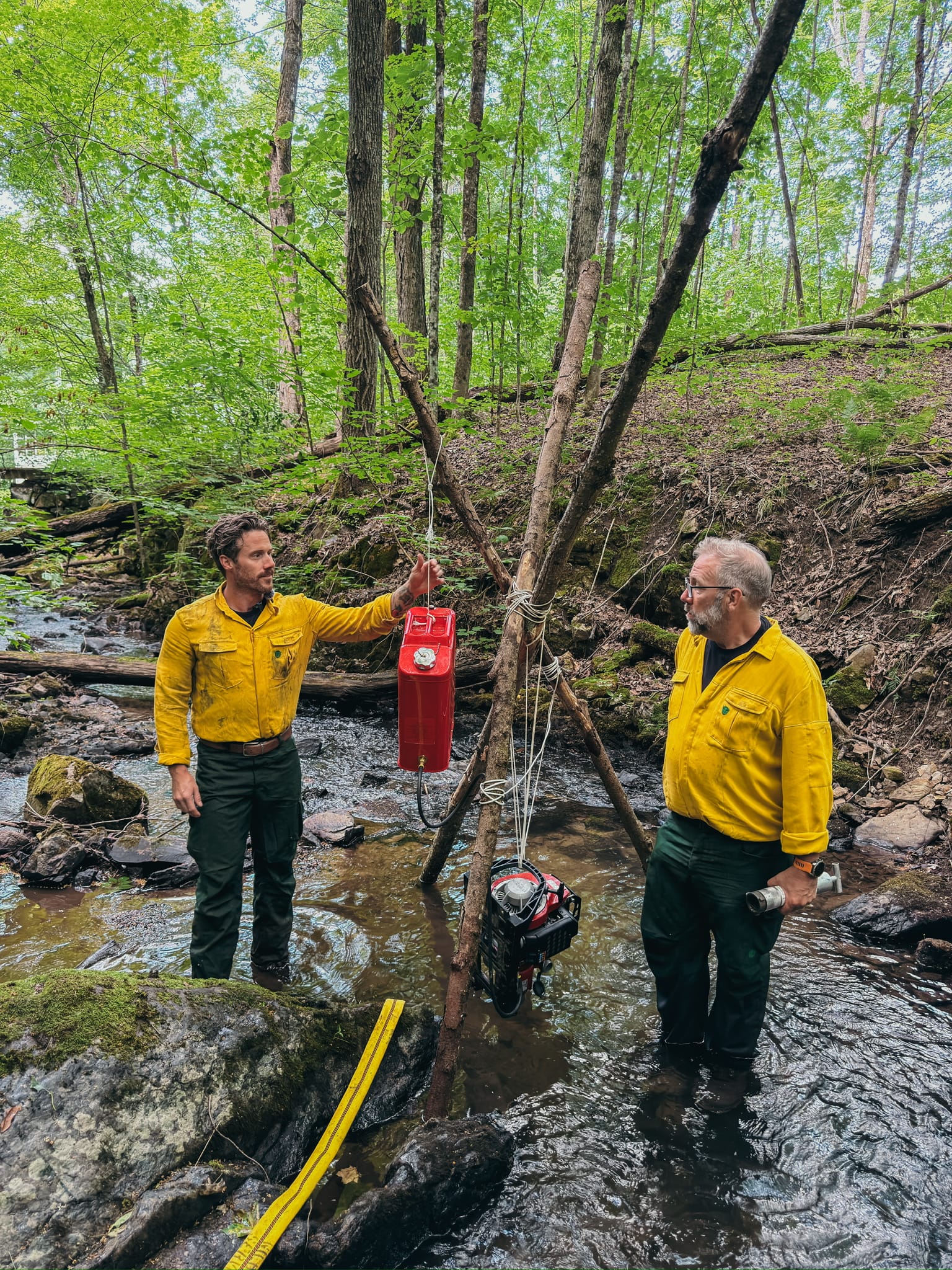
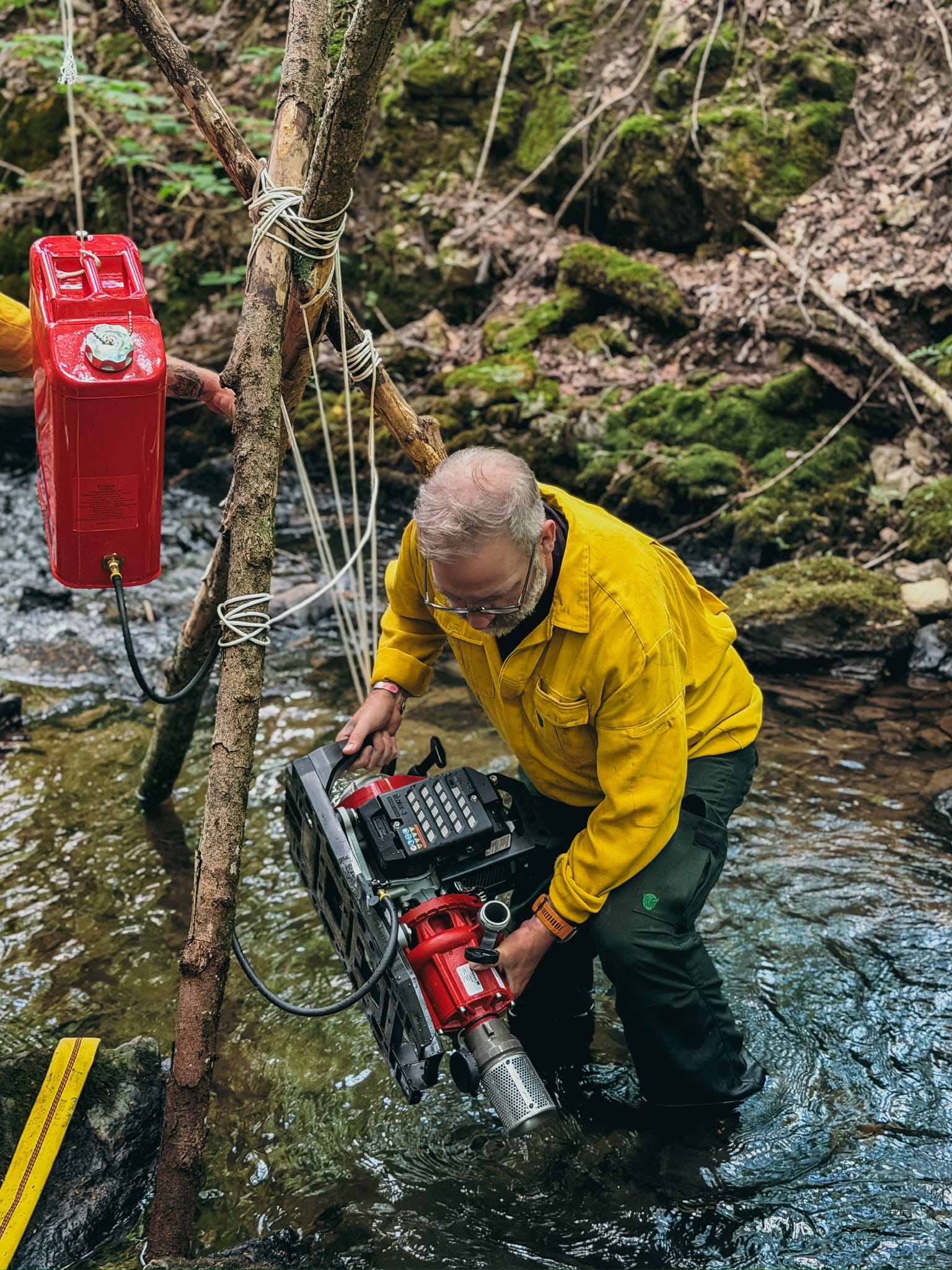
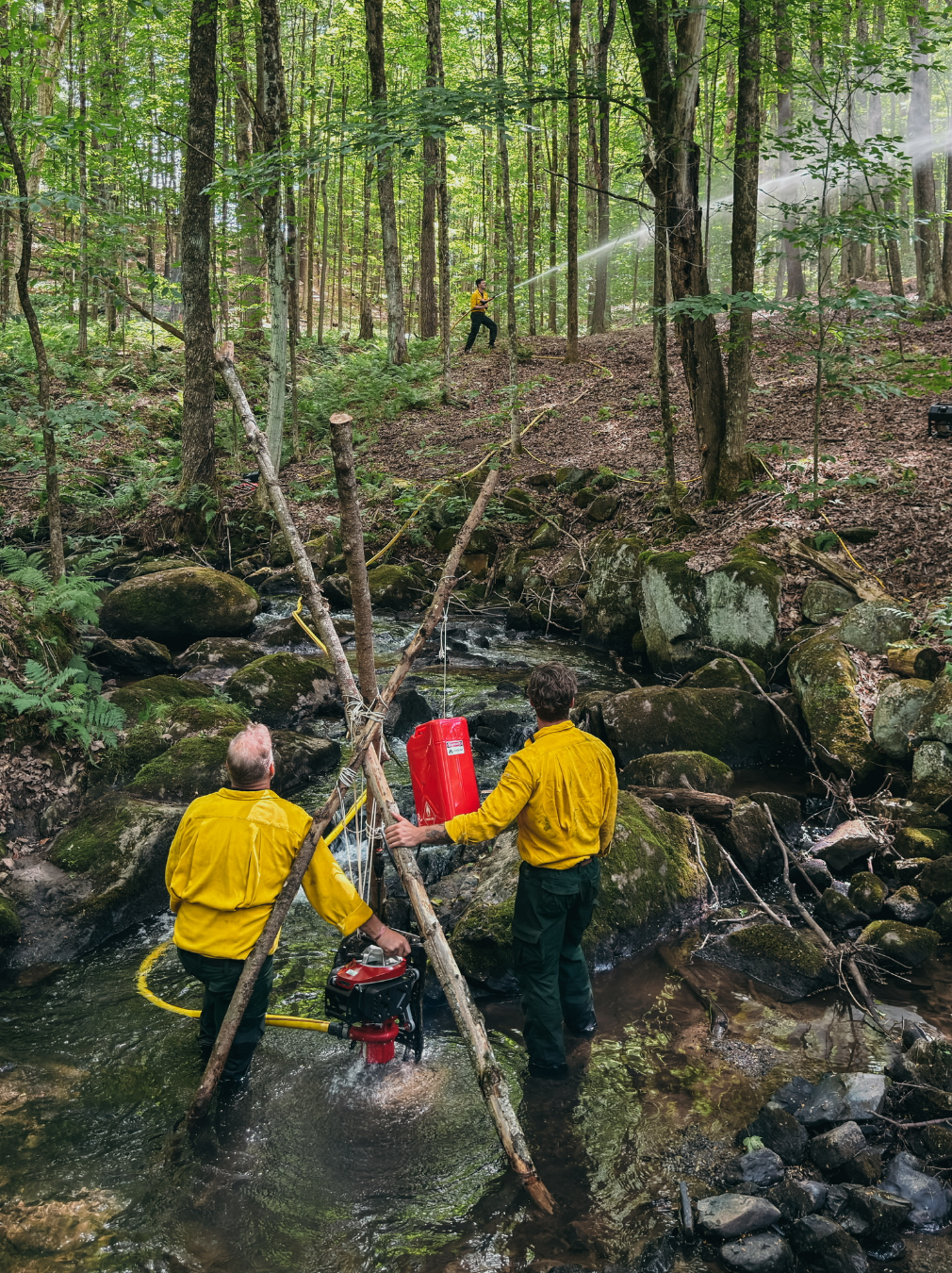
The point isn’t that firefighters should routinely run a MARK-3® pump upside down. The point is that the pump doesn’t need perfect terrain to do its job.
A conventional 4-stroke engine has an oil-filled crankcase and specified operating-angle limitations. The MARK-3® pump’s 2-stroke engine works differently. It runs on a 50:1 gasoline-to-2-stroke-oil mixture, meaning lubrication travels through the engine with the fuel rather than relying on oil sitting in a conventional crankcase. That fundamental difference gives crews considerably more flexibility when positioning the pump on steep or uneven terrain.
And orientation is only one part of the advantage.
Wildland firefighters may need to carry a pump down a ravine, establish a water source far from vehicle access, overcome hundreds of feet or meters of elevation, or push water through long hose lays. In those environments, power-to-weight ratio, portability, pressure, and adaptability all matter.
It’s not a stunt about running a pump upside down. It’s a demonstration of what a purpose-built 2-stroke wildland fire pump allows crews to do when conditions are anything but ideal.
Watch the demonstrations
Of course, field adaptability should never override safe operating practices. All WATERAX equipment should be operated according to the applicable operator’s manual, and firefighters should always follow their department or agency SOPs, environmental requirements, local regulations, and incident command direction.