
Protecting Homes When Firefighters Can't Be Everywhere
Scroll DownHow structure protection systems are helping communities become more resilient to wildfire
Every wildfire season brings heartbreaking images of neighborhoods devastated by fire while nearby homes remain standing. As wildfires become larger, more frequent, and increasingly unpredictable, one reality has become impossible to ignore:
Firefighters simply cannot protect every structure at once.
This is not a reflection of their dedication or capability, it is the reality of today's wildfire environment. During major incidents, hundreds or even thousands of homes may be threatened simultaneously, forcing crews to prioritize life safety while strategically deploying limited personnel and equipment where they can have the greatest impact.
At the same time, many properties already have one of the most valuable firefighting resources available: water.
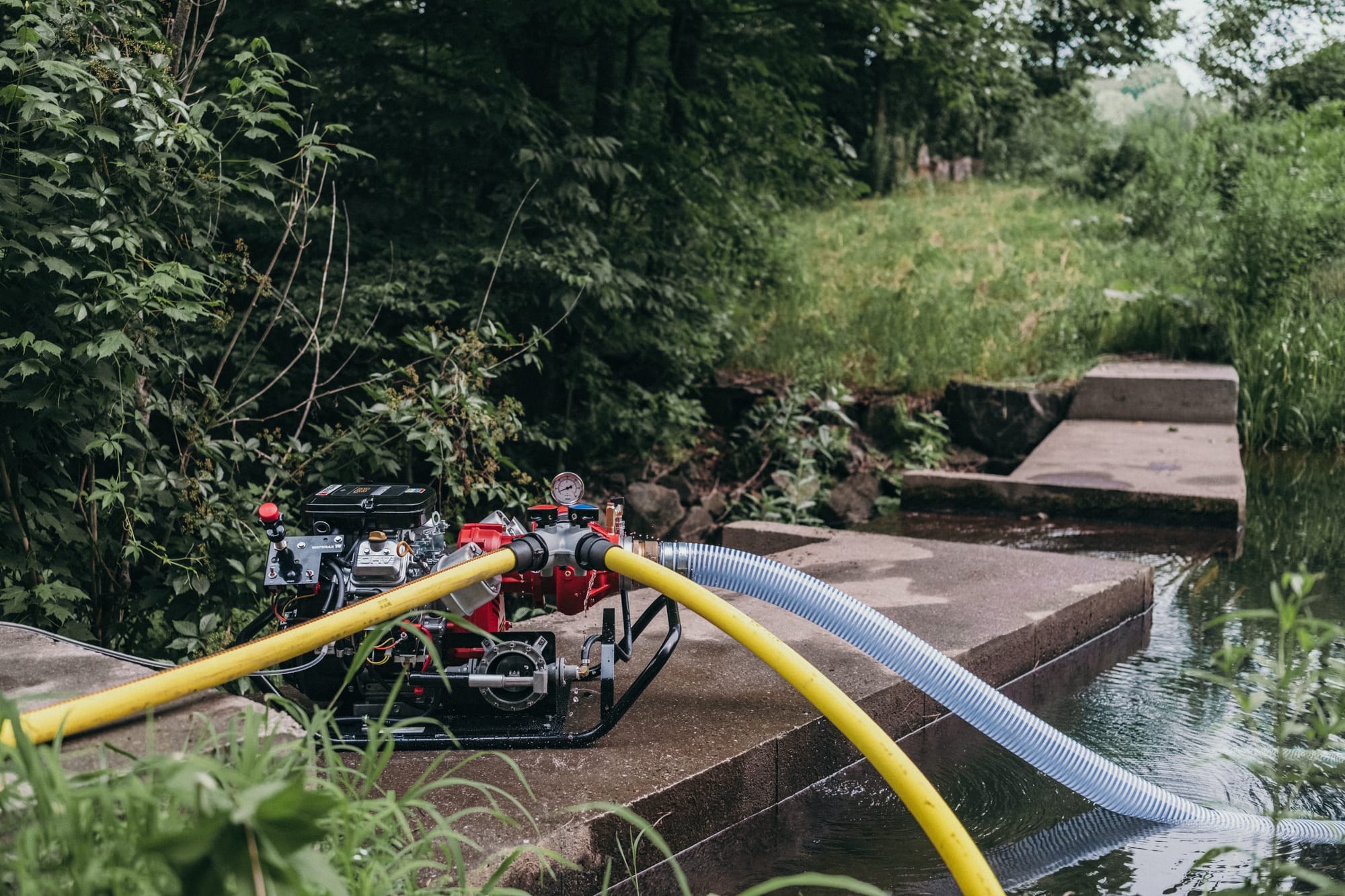
Whether it's a swimming pool, pond, lake, irrigation reservoir, portable water tank, or another accessible water source, many homeowners already have the means to support structure protection without relying on municipal hydrants or drawing resources away from emergency responders.
When paired with a portable fire pump and a properly designed sprinkler system, these existing water sources can help wet vulnerable areas around a property before the fire arrives, reducing the likelihood of ignition from embers and improving the chances that a structure survives until firefighters can safely reach it.
Rather than replacing first responders, these systems complement their efforts. A home that has already been prepared, with defensible space, available water, and a functioning sprinkler system, is often easier, safer, and faster for firefighters to defend when they arrive.
As communities continue to adapt to changing wildfire conditions, structure protection is becoming an increasingly important part of wildfire preparedness, not only for fire agencies, but also for homeowners, businesses, utilities, and municipalities.
Understanding structure protection
Contrary to popular belief, structure protection sprinklers are not designed to extinguish an advancing wildfire.
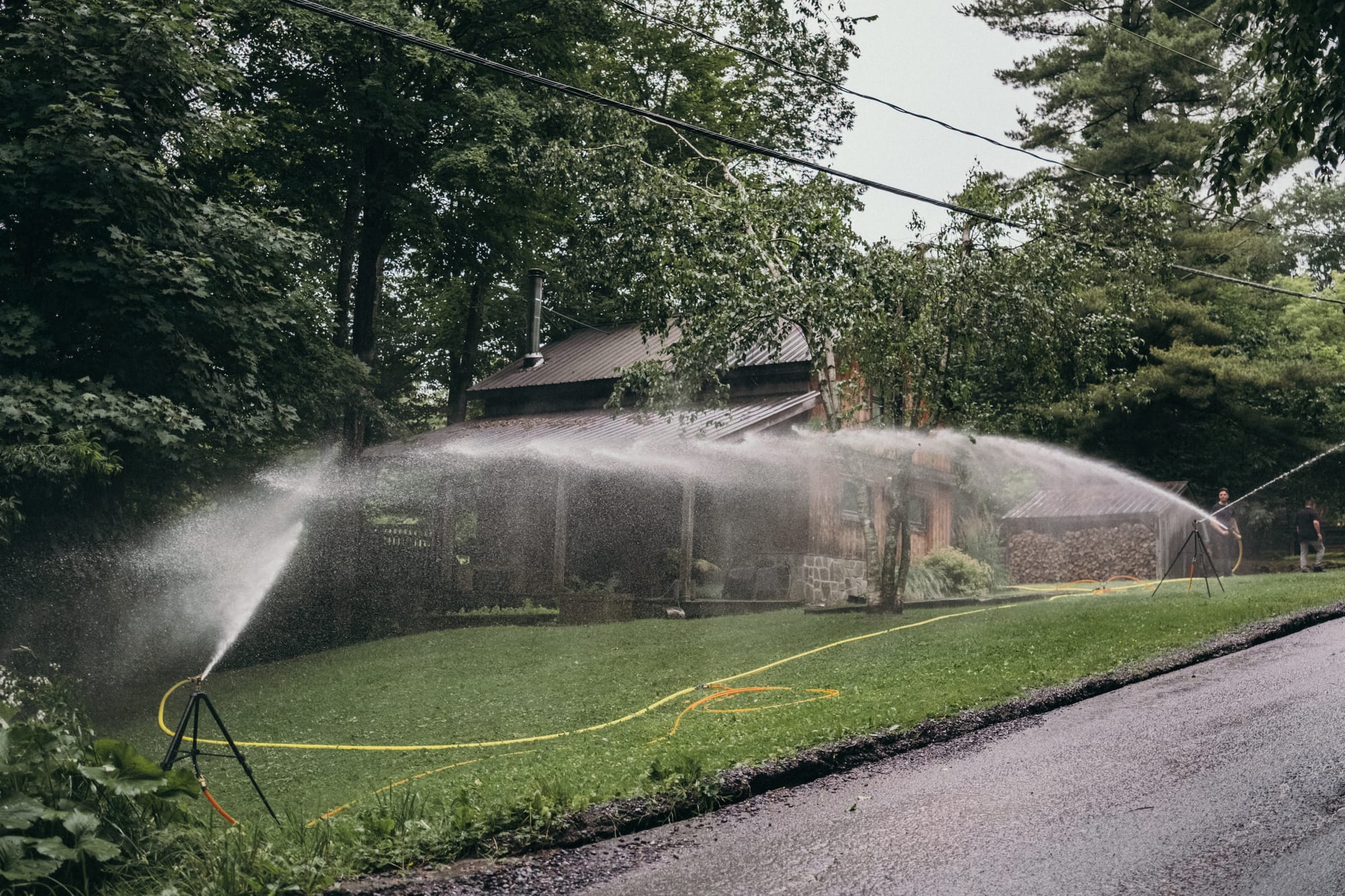
Their purpose is to improve a structure's chances of surviving by reducing the likelihood of ignition. By continuously applying water to roofs, walls, decks, surrounding vegetation, and other vulnerable areas, sprinklers help cool combustible surfaces, increase humidity around the structure, and reduce the chance that wind-driven embers will ignite the property.
This distinction is important because many homes are not destroyed by direct flame contact. Instead, they are lost to ember attack. Burning embers can travel long distances ahead of the main fire front, igniting roofs, mulch, fences, decks, vegetation, and other combustible materials long before flames reach the structure itself.
When combined with defensible space, fire-resistant construction materials, and proper vegetation management, sprinkler systems become another layer of protection that can significantly improve a home's resilience.
One mission, many solutions
Every property presents unique challenges.
A lakeside cabin, a mountain home, a working ranch, or a rural subdivision each requires a different approach to structure protection. Available water sources, terrain, elevation, hose distances, property size, and the number of structures all influence the type of pumping system best suited for the application.
There is no single solution that fits every scenario.
Portable fire pumps allow water to be drafted directly from swimming pools, lakes, ponds, rivers, streams, portable tanks, or irrigation reservoirs, making them ideal for locations where hydrants are unavailable or where additional water sources are needed during a wildfire emergency.
The objective isn't simply to move water, it's to move enough water, at the right pressure, to the right locations for as long as necessary.
Matching the pump to the mission
One common misconception is that structure protection requires a single type of pump.
In reality, different situations call for different solutions.
During a recent field demonstration, three different WATERAX pump platforms were used to power structure protection sprinkler systems protecting two separate buildings.
The MINI-MARK® pump demonstrated how a lightweight, highly portable solution can quickly supply sprinklers protecting a small structure where a nearby water source is readily available.
The VERSAX® Cart System showcased a mobile, self-contained package that can be deployed quickly while remaining easy to reposition as wildfire conditions change. Its portability makes it an excellent solution for homeowners or crews looking for rapid deployment without sacrificing performance.
Finally, the B2X-23PC demonstrated how a higher-flow portable pump can protect multiple structures simultaneously. During the demonstration, the system supplied a 300-foot (91 m) 1½-inch trunk line feeding sprinkler systems around two cabins, with a total of sixteen sprinklers operating across both buildings. Depending on sprinkler selection and system design, the pump is capable of supplying even larger structure protection layouts.
Each system accomplished the same objective.
Each simply addressed a different operational need.
The lesson was clear: the best pump isn't necessarily the biggest or the most powerful, it's the one that best matches the mission.
Preparing before the fire arrives
One of the biggest advantages of structure protection systems is that they can often be installed and tested long before wildfire season begins.
Homeowners can identify reliable water sources, pre-plan hose layouts, install sprinkler systems, and establish defensible space around structures before an emergency ever occurs.
This preparation not only increases the likelihood of a structure surviving, it also helps firefighters.
When crews arrive at a property that already has defensible space, an available water supply, and an operational sprinkler system, they can integrate those existing measures into their suppression strategy rather than starting from scratch.
Prepared properties are often faster, safer, and more efficient to defend.
Building more resilient communities
Wildfires are no longer confined to remote forests. Today, they increasingly threaten homes, businesses, utilities, and critical infrastructure located throughout the wildland-urban interface.
As these risks continue to grow, structure protection will become an increasingly important component of community resilience.
No single sprinkler, portable pump, or firefighting tactic can eliminate wildfire risk. However, combining defensible space, reliable water supplies, portable pumping systems, and properly designed sprinkler layouts can significantly improve a property's ability to withstand ember storms and approaching wildfire.
Ultimately, structure protection isn't about replacing firefighters.
It's about giving them another tool and giving communities the opportunity to prepare before the first engine arrives.
Because when wildfire strikes and resources are stretched across hundreds of structures, the preparations made before the fire often become the difference between a home that survives and one that doesn't.
At WATERAX, we've spent more than 125 years helping firefighters, agencies, and communities deliver water where it's needed most. As wildfire challenges continue to evolve, we believe one principle remains unchanged: We move water where and when it matters most.